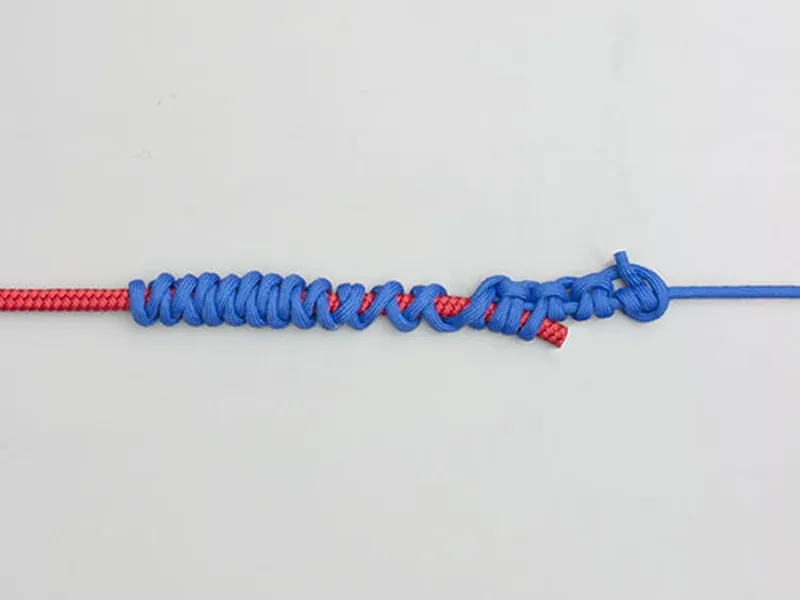
To join thin, slick braided main line to a thicker leader with a slim, strong joint that passes through the rod guides without catching.
When
Unknown; no date appears in the sources.
Who devised it
Unknown; Animated Knots says Patrick Sébile, a Frenchman, is said to have introduced it, and the name Fred Goldman is also mentioned. According to Netknots, Australian skipper Jason Ehrlich popularised the easier tying method shown on its site.
Where the name comes from
Explanations of 'FG' such as Fine Grip circulate; 'GT' comes from fishing for giant trevally and 'Sebile' from Patrick Sébile (Animated Knots).
Its story
The knot's origin is unknown. Animated Knots says several explanations of 'FG' circulate, such as Fine Grip, and that a possible originator named Fred Goldman is mentioned; it is also called the GT knot for its value in fishing for giant trevally, and the Sebile knot, because Patrick Sébile, a Frenchman, is said to have introduced it. Netknots and Knots 3D say it became popular with sport fishermen in Australia; Netknots adds that the easier tying method shown on its page was popularised by Australian skipper Jason Ehrlich. Anglers like this braid-to-leader joint because it is slim and passes through the rod guides without catching.
Where the line cannot be kept taut throughout the wrapping; the knot's strength depends on that tension and on the final hard pull.
Weakness
It takes time to learn; if the braid is not kept taut while wrapping, or the wraps are not seated on the leader with a final hard pull, the joint can slip.