Bend
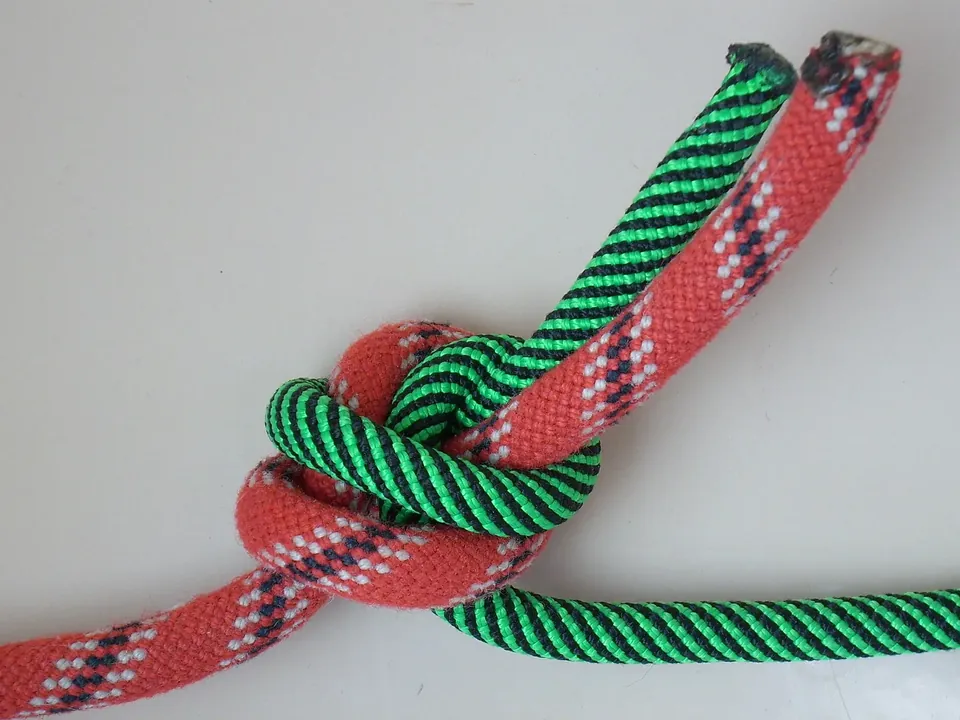
Offset overhand bend
Used to join abseil ropes; the knot rolls over rock edges instead of catching.
Life safety: This knot is used in climbing, rescue or tree work. This app does not replace hands-on training; for life-safety work, practise under an instructor.
How to tie it
- The other rope has a loose overhand knot in its end. Lay your working end beside its standing part and follow it up: UNDER the other rope's end, OVER the part that tucks under the standing part.
- Follow round the loop, always on the outside of the other rope; pass UNDER its tail.
- Go with the other rope's end OVER both standing parts.
- Tuck into the loop UNDER both standing parts: the two ends now form one overhand knot.
- Come out OVER the edge of the loop, beside the other tail. Both tails finish on the same side.
- Dress the knot so the strands do not cross; tighten by pulling both tails together, then each rope. Leave long tails.
The method was checked against: Wikipedia: Offset overhand bend, NetKnots: Overhand Bend.
Other English names: flat overhand bend, Euro death knot, European death knot
No sourced Turkish name yet.
- Where not to use it
- With short tails or in inexperienced hands.
- Weakness
- With short tails it can roll off the ends and open.
Similar and alternative knots
Sources and verification
- Wikipedia: Offset overhand bend
- Wikidata: Q1388647
- The tying steps were played in the rope engine to produce the checking signature; the comparison with two independent sources is in docs/pilot-baglar.md.