Bend
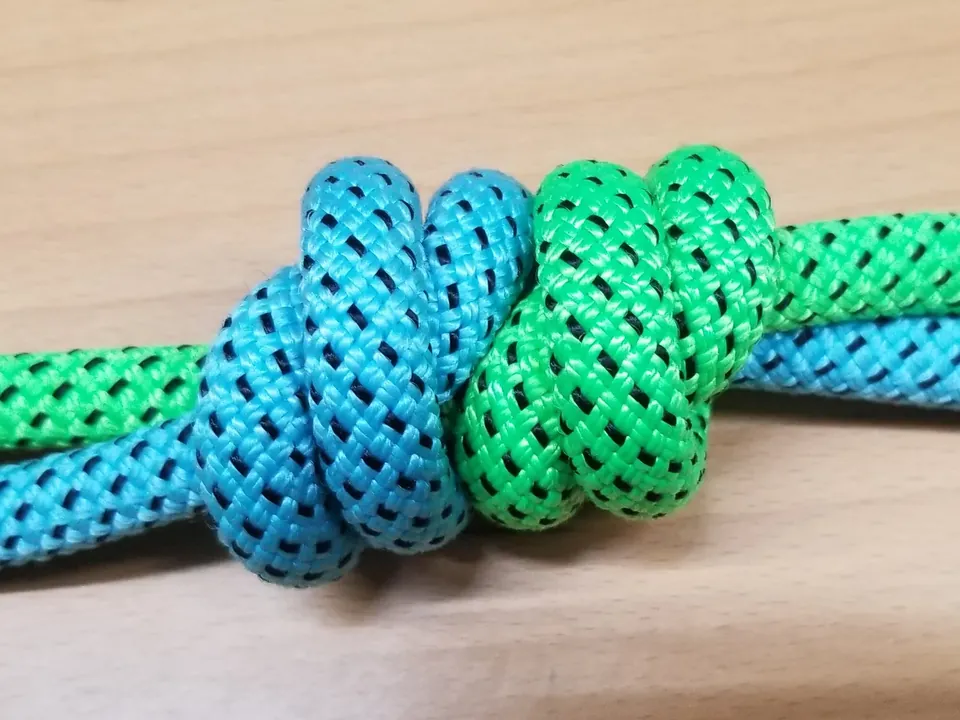
Double fisherman's knot
Turkish: Çift balıkçı düğümü
Joins two ropes permanently and securely; also used to close prusik loops.
Life safety: This knot is used in climbing, rescue or tree work. This app does not replace hands-on training; for life-safety work, practise under an instructor.
How to tie it
- Lay the two ropes side by side, ends pointing opposite ways. Wrap the first working end round the other rope: OVER it and back UNDER it.
- Cross the end OVER its own standing part.
- Make a second wrap the same way: OVER the other rope and back UNDER it beyond the first wrap.
- Cross the end OVER its own standing part again and bring it alongside the other rope.
- Pass the end back through both wraps along the other rope: UNDER the two front parts, OVER the two back parts, out beyond the wraps. A double overhand now grips the other rope.
- Now do the same with the second working end: wrap the first rope, OVER it and back UNDER.
- Cross the second end OVER its own standing part.
- Make the second wrap: OVER, then back UNDER beyond the first wrap.
- Cross the end OVER its own standing part again and bring it alongside the first rope.
- Pass the end back through both wraps: UNDER the front parts, OVER the back parts.
- Tighten each knot, then pull the standing parts apart so the knots seat against each other; leave long tails.
The method was checked against: NetKnots: Double Fisherman's, AFAD, "İpli Kurtarma Hazırlayıcı Eğitimi" (2025), s. 12.
Turkish names, by who uses them
- Climbers: Çift balıkçı düğümü
- General use: Çift balıkçı düğümü
Main Turkish name from climbers · AUZEF Dağcılık
- Where not to use it
- In joins that have to be undone later.
- Weakness
- Jams permanently under load.
Similar and alternative knots
Sources and verification
- The tying steps were played in the rope engine to produce the checking signature; the comparison with two independent sources is in docs/pilot-baglar.md.