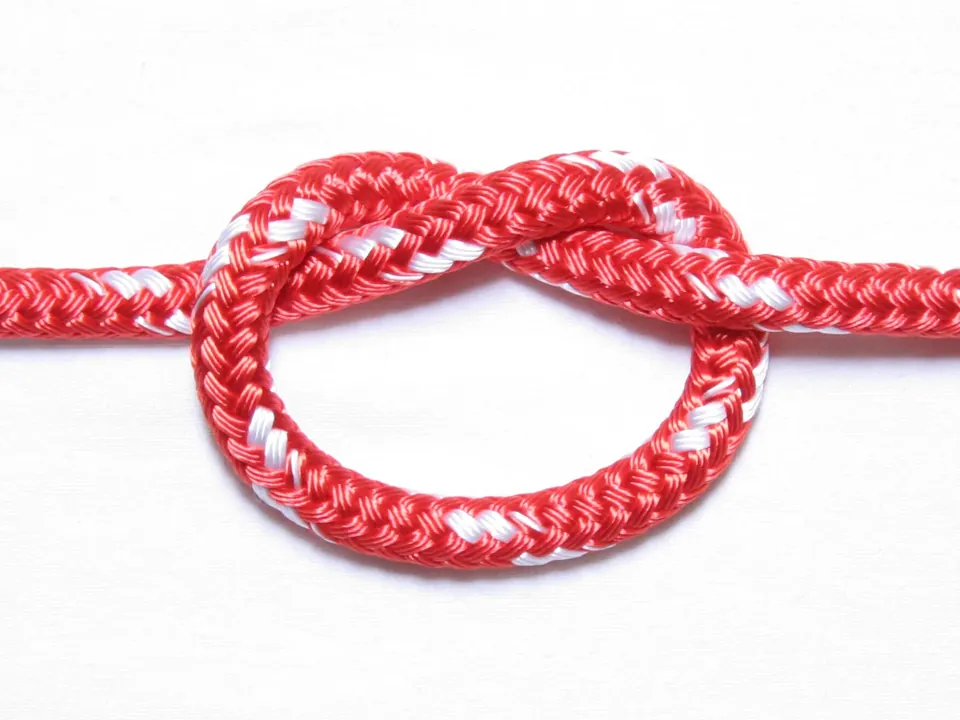
Stopper
Overhand knot
Turkish: Düğüm
The quickest stopper you can tie in the end of a rope, and the first step of many other knots.
How to tie it
- Bring the working end OVER the standing part to make a loop.
- Hold the loop where it crosses; tuck the working end UNDER the standing part into the loop.
- Bring the working end out OVER the lower edge of the loop.
- Pull the ends to tighten the knot.
The method was checked against: Wikipedia: Overhand knot, NetKnots: Overhand Knot.
Turkish names, by who uses them
- Seafarers: Düğüm
- Sailors: Kör düğüm, Yarım düğüm
- Climbers: Adi düğüm
- Scouts: Düğüm
- General use: Kördüğüm, Basit düğüm
Other English names: thumb knot
Main Turkish name from seafarers · Sahil Güvenlik, MEB
Sources for the names
- Sakarya İzcileri, "İzci düğümleri: Gemici bağları"
- Sahil Güvenlik Komutanlığı, "Gemici Bağları"
- MEB MEGEP, Denizcilik: Gemici Bağları modülü (2014)
- Y. Güngör, Dağcılık, İstanbul Üniversitesi AUZEF ders kitabı
- Boğaziçi Üniversitesi Yelken, "Düğüm-1" ve "Düğüm-2" ders notları (2024)
- TÜBİTAK Bilim Çocuk, Temmuz 2019 eki "Düğümler"
- AFAD, "İpli Kurtarma Hazırlayıcı Eğitimi" (2025)
- AFAD, "Akarsuda Arama ve Kurtarma Temel Eğitimi" (2025)
- Boğaziçi Üniversitesi Yelken Takımı, "Temel Yelkencilik Eğitim Kitabı"
- Where not to use it
- As the only stopper where real load comes on; a figure-eight is the better stopper.
- Weakness
- Jams hard under load and is difficult to untie in wet or thin line.
Similar and alternative knots
Sources and verification
- Wikipedia: Overhand knot
- Wikidata: Q332491
- The tying steps were played in the rope engine to produce the checking signature; the comparison with two independent sources is in docs/pilot-baglar.md.