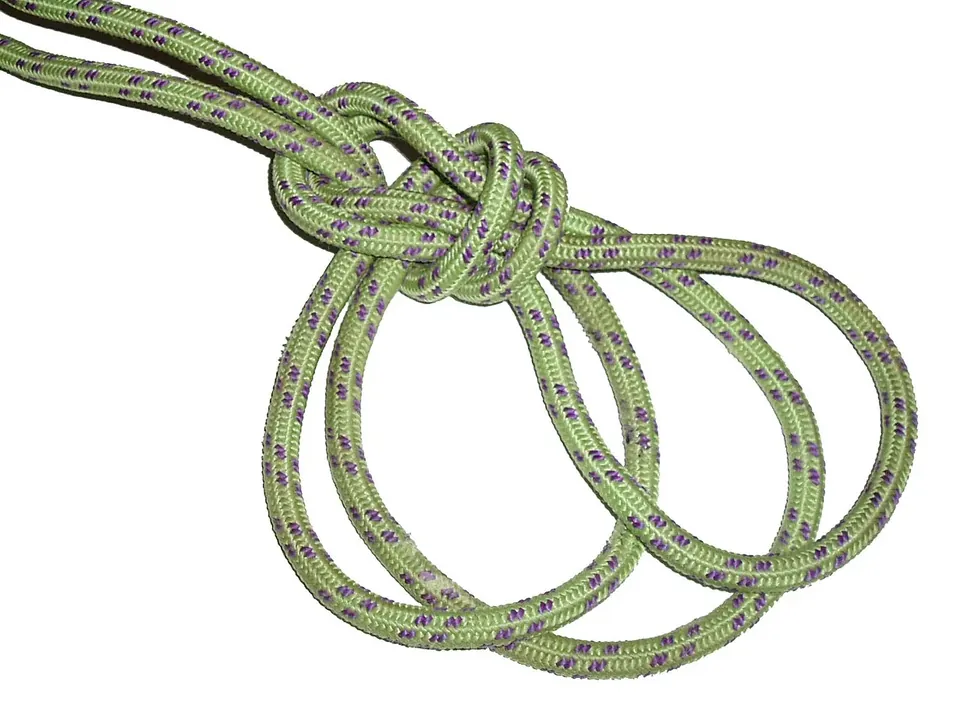
A bowline that gives three fixed loops at mid-rope, with no need to reach either end; it serves in an anchor that equalizes itself or to support a person in a rescue.
MediumNo ABoK numberSearch and rescueClimbing
Life safety: This knot is used in climbing, rescue or tree work. This app does not replace hands-on training; for life-safety work, practise under an instructor.
Getting several fixed loops at mid-rope, with no need to reach the ends, to support a person in a rescue or to share a load between several anchor points.
When
The 1980s (according to Knots 3D).
Who devised it
Credited to Robert Chisnall, a Canadian climbing and rescue expert (Knots 3D).
Where the name comes from
From the three loops the knot forms.
Its story
The triple bowline is a version of the bowline tied with the rope doubled, giving three loops in the middle of the rope without using the ends; the name comes from those three loops. Knots 3D credits Robert Chisnall, a climbing and rescue expert and forensic knot consultant from Ontario, Canada, with devising it in the 1980s. It is used in emergency work such as mountain rescue; according to Wikipedia the third loop is then passed around the person's waist or torso. It is often confused with the double bowline, which is tied in a single strand and has only one loop.
In a system that holds a person, without hands-on climbing or rescue training.
Weakness
How big the third loop comes out depends on how much bight is drawn through, so it may not match the other two, and the knot is often confused with the single-loop double bowline.