Triple overhand knot TR
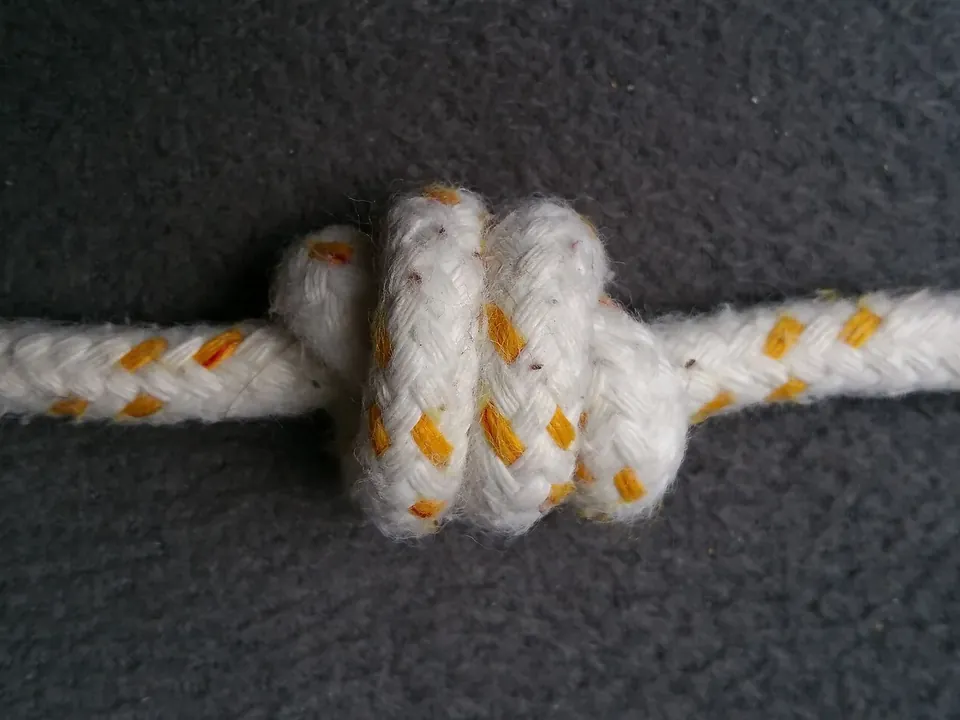
Triple overhand knot, tied and tightened

Stopper

Triple overhand knot

Makes a longer, barrel-shaped stopper than the double overhand at the end of a rope or cord; climbers tie it at rope ends, and it is also a decorative finish for shoelaces, hoodie cords and curtain pulls.

Easy ABoK 517 ClimbingDecoration and macramé

Life safety: This knot is used in climbing, rescue or tree work. This app does not replace hands-on training; for life-safety work, practise under an instructor.

The animation and practice area for this knot are not ready yet. Available now: Overhand knot, Figure-eight knot, Double overhand knot, Stevedore knot, Ashley's stopper knot, Heaving line knot, Monkey's fist, Slip knot, Sheet bend, Double sheet bend, Carrick bend, Fisherman's knot, Double fisherman's knot, Water knot, Flemish bend (figure-eight bend), Offset overhand bend, Zeppelin bend, Hunter's bend, Butterfly bend, Blood knot (barrel knot), Albright special, Nail knot, Harness bend, Heaving line bend, Racking bend, Reever knot, Simple Simon over, Beer knot, Adjustable bend, Bowline, Double bowline, Water bowline, Bowline on a bight, Spanish bowline, Yosemite bowline, Cowboy bowline, Running bowline, Eskimo bowline, Figure-eight loop, Directional figure eight, Double figure-eight loop, Figure-of-nine loop, Alpine butterfly loop, Overhand loop, Angler's loop (perfection loop), Dropper loop, Farmer's loop, Artillery loop (manharness knot), Fireman's chair knot, Honda knot, Zeppelin loop, Bimini twist, Clove hitch, Slipped clove hitch, Cow hitch (lark's head), Half hitch, Two half-hitches, Round turn and two half-hitches, Anchor bend (fisherman's bend), Timber hitch, Killick hitch, Rolling hitch, Magnus hitch, Taut-line hitch, Buntline hitch, Cleat hitch, Highwayman's hitch, Tumble hitch, Mooring hitch, Halter hitch, Pile hitch, Constrictor knot, Strangle knot, Trucker's hitch, Siberian hitch, Marlinespike hitch, Pipe hitch, Tensionless hitch, Munter hitch, Cat's paw, Ground-line hitch, Becket hitch, Halyard bend, Lobster buoy hitch, Barrel hitch, Bale sling hitch, Swing hitch, Prusik knot, Klemheist knot, Bachmann knot, Autoblock (French prusik), Blake's hitch, Distel hitch, Adjustable grip hitch, Reef knot (square knot), Granny knot, Thief knot, Miller's knot, Packer's knot, Boa knot, Transom knot, Sheepshank, Chain sinnet, Square lashing, Diagonal lashing, Shear lashing, Common whipping, Sailmaker's whipping, Improved clinch knot, Palomar knot, Uni knot, Trilene knot, Arbor knot, Turle knot, Turk's head knot, Carrick mat, Wall and crown knot, Matthew Walker knot, Diamond knot, Chinese button knot, Celtic button knot, Pan Chang knot, Good luck knot, True lover's knot, Friendship knot.

How to tie it

  1. Make a loop at the end of the rope and pass the working end through it; leave the resulting overhand knot loose, without tightening.
  2. Take the working end once more around the same side of the loop and pass it through the loop a second time.
  3. Go round once more in the same direction and pass the working end through the loop a third time.
  4. Lay the turns side by side without letting them cross, then pull both ends to tighten; the knot twists and the turns line up into a barrel shape.
  5. As you snug it up, work the knot toward the rope's end so that a short tail still projects beyond it.

The method was checked against: Knots 3D: Triple Overhand Knot (animasyon), Wikipedia: Double overhand knot (Instructions for tying; çoklu biçim notu).

Origin and story

Why it was needed
A bigger, neater stopper than the overhand or double overhand at the end of a rope or cord; the knot on the robe belt of Franciscan and Capuchin friars, symbolising three vows.
When
Unknown; the sources give no date for the knot. Knots 3D writes that the Franciscan order, which uses it on its belts, was founded by Francis of Assisi in 1209 and its Capuchin branch in 1528, but does not say since when the knot has been used on the belt.
Who devised it
Unknown.
Where the name comes from
'Triple overhand' means an overhand knot with three passes. The name 'Franciscan friar's knot' comes from the order's belt; Knots 3D considers 'French monk's knot' wrong on two counts, since the Franciscans are Italian friars, neither French nor monks. Bear Essentials writes that the name 'barrel knot' also belongs to this knot.

Its story

The triple overhand knot is a stopper shaped like a small barrel, formed by tucking the working end through the loop of an overhand knot three times; Knots 3D lists it as number 517 in Ashley's book. It is known as the knot on the robe belt of Franciscan friars: citing research by Charles Hamel of the IGKT (International Guild of Knot Tyers), Knots 3D writes that the Franciscans and the Capuchins, an offshoot of their order, tie only this knot in their belts, and that its three turns stand for the three Franciscan vows: poverty, chastity and obedience. Its names have been mixed up over time: people have also called it the Capuchin knot or the French monk's knot, yet Hamel's findings give the name Capuchin to another knot, the three-turn heaving line knot (#537). Climbers use it as a stopper at the end of a rope, and it also serves as a neat decorative finish on shoelaces, hoodie cords and curtain pulls.

Source: Knots 3D: Triple Overhand Knot, The Bear Essentials: How to Tie the Capuchin Knot.

No sourced Turkish name yet.

Where not to use it
On ends that must be untied later, and in climbing as the only safeguard without hands-on training.
Weakness
Once loaded it is very hard to untie, and harder still when wet; if the turns are not laid side by side while tightening, the knot ends up shapeless. In climbing none of this replaces hands-on training.
Similar and alternative knots

Sources and verification

  • The card was written in our own words from Wikipedia and Wikidata data; the tying method has not yet been checked against two sources.