Trident loop TR
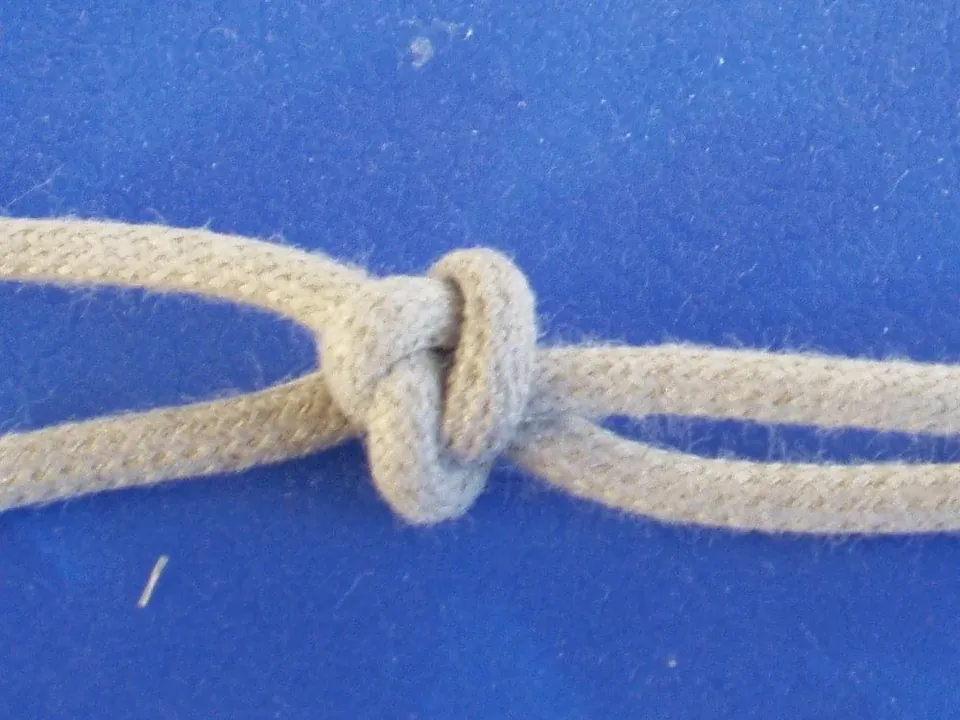
Trident loop, tied and tightened

Loop

Trident loop

Makes a fixed loop at the end of a rope using the structure of Ashley's bend; it has proved very resistant to slipping under shock loads.

Medium No ABoK number Loads and everyday jobsClimbing

Life safety: This knot is used in climbing, rescue or tree work. This app does not replace hands-on training; for life-safety work, practise under an instructor.

The animation and practice area for this knot are not ready yet. Available now: Overhand knot, Figure-eight knot, Double overhand knot, Stevedore knot, Ashley's stopper knot, Heaving line knot, Monkey's fist, Slip knot, Sheet bend, Double sheet bend, Carrick bend, Fisherman's knot, Double fisherman's knot, Water knot, Flemish bend (figure-eight bend), Offset overhand bend, Zeppelin bend, Hunter's bend, Butterfly bend, Blood knot (barrel knot), Albright special, Nail knot, Harness bend, Heaving line bend, Racking bend, Reever knot, Simple Simon over, Beer knot, Adjustable bend, Bowline, Double bowline, Water bowline, Bowline on a bight, Spanish bowline, Yosemite bowline, Cowboy bowline, Running bowline, Eskimo bowline, Figure-eight loop, Directional figure eight, Double figure-eight loop, Figure-of-nine loop, Alpine butterfly loop, Overhand loop, Angler's loop (perfection loop), Dropper loop, Farmer's loop, Artillery loop (manharness knot), Fireman's chair knot, Honda knot, Zeppelin loop, Bimini twist, Clove hitch, Slipped clove hitch, Cow hitch (lark's head), Half hitch, Two half-hitches, Round turn and two half-hitches, Anchor bend (fisherman's bend), Timber hitch, Killick hitch, Rolling hitch, Magnus hitch, Taut-line hitch, Buntline hitch, Cleat hitch, Highwayman's hitch, Tumble hitch, Mooring hitch, Halter hitch, Pile hitch, Constrictor knot, Strangle knot, Trucker's hitch, Siberian hitch, Marlinespike hitch, Pipe hitch, Tensionless hitch, Munter hitch, Cat's paw, Ground-line hitch, Becket hitch, Halyard bend, Lobster buoy hitch, Barrel hitch, Bale sling hitch, Swing hitch, Prusik knot, Klemheist knot, Bachmann knot, Autoblock (French prusik), Blake's hitch, Distel hitch, Adjustable grip hitch, Reef knot (square knot), Granny knot, Thief knot, Miller's knot, Packer's knot, Boa knot, Transom knot, Sheepshank, Chain sinnet, Square lashing, Diagonal lashing, Shear lashing, Common whipping, Sailmaker's whipping, Improved clinch knot, Palomar knot, Uni knot, Trilene knot, Arbor knot, Turle knot, Turk's head knot, Carrick mat, Wall and crown knot, Matthew Walker knot, Diamond knot, Chinese button knot, Celtic button knot, Pan Chang knot, Good luck knot, True lover's knot, Friendship knot.

How to tie it

  1. Tie a loose overhand knot, keeping a long enough working end to make the loop and finish the knot.
  2. Bring the working end back around to form the loop at the size you want.
  3. Fold the working end back on itself to make a small bight.
  4. Push the bight through the middle of the overhand knot, between its crossings.
  5. Lead what is left of the working end behind the knot, passing it UNDER the loop.
  6. Pass the end upward through the bight.
  7. Pull the loop, the standing part and the working end separately to tighten the knot well.

The method was checked against: Wikipedia: Trident loop, Instructables: Trident Loop (2019).

Origin and story

Why it was needed
A climbing tie-in loop that resists slipping under shock load, as an alternative to the figure-eight loop.
When
Unknown; it appears in Budworth's The Complete Book of Knots in 1997.
Who devised it
Proposed by Robert M. Wolfe, a Chicago physician; introduced by Geoffrey Budworth in his books.

Its story

Robert M. Wolfe, a physician from Chicago, put the trident loop forward for climbers as an alternative to the figure-eight loop, building it as a single-rope loop version of Ashley's bend (ABoK 1452). It is found in Geoffrey Budworth's The Complete Book of Knots (1997) and in The Book of Knots by Budworth and Jason Dalton. Some tests put its strength between that of the bowline and the figure-eight loop, and shock-load tests found it unusually resistant to slipping. On the IGKT forum one member wrote that the half hitch tacked on at the end in one publication does not belong to the knot itself, and that after a hard load the loop was difficult to untie.
Source: Wikipedia: Trident loop, IGKT forumu: "trident loop" (2006), IGKT forumu: "Trident Loop" (2008).

No sourced Turkish name yet.

Where not to use it
As a climbing tie-in knot without hands-on training; it is not clear what testing lies behind the published claims for its strength and security.
Weakness
It can jam and be hard to untie after heavy loading; one IGKT member found it easy to tie wrongly and hard to remember.

Similar and alternative knots

Sources and verification