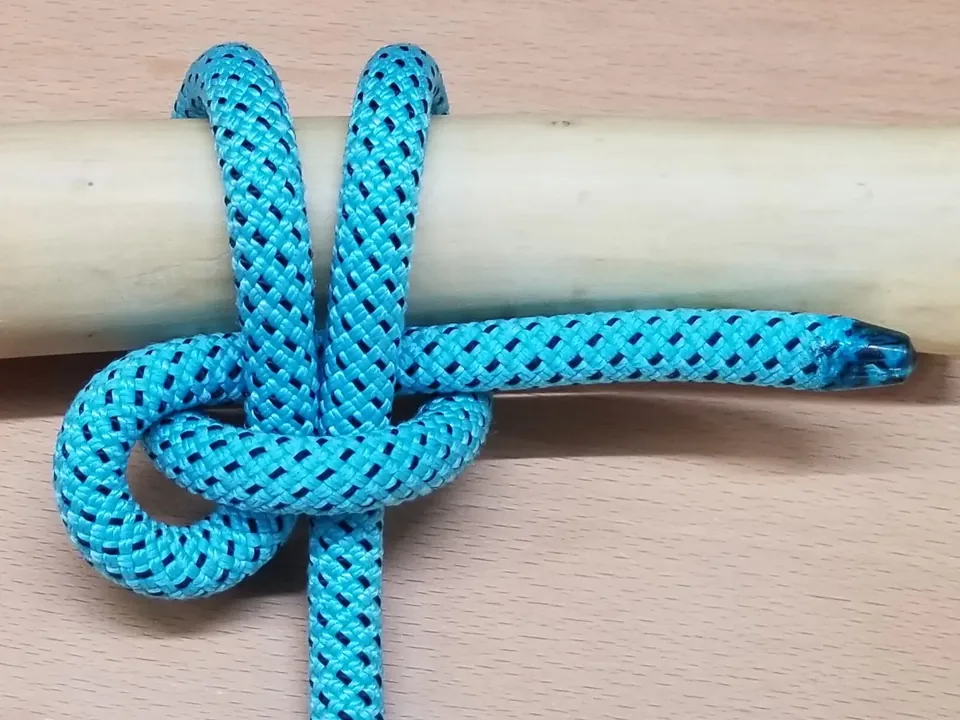
Ties a rope to a ring, post or bar; a single tuck added to the unloaded leg of a cow hitch keeps it from slipping even when the load comes from one leg only.
EasyNo ABoK numberLoads and everyday jobsSailing and boatingClimbingSearch and rescue
Life safety: This knot is used in climbing, rescue or tree work. This app does not replace hands-on training; for life-safety work, practise under an instructor.
Making the cow hitch secure enough not to slip even when the load comes from one leg only.
When
Unknown; it appears in Harry Asher's The Alternative Knot Book of 1989 (Knots 3D).
Who devised it
Unknown; Dr. Harry Asher gave it its name (Knots 3D).
Where the name comes from
Harry Asher named it; according to Knots 3D, 'pedigree' marks it as an improved form of the cow hitch. Other names: improved cow hitch, cow hitch variant, Asher's cow hitch.
Its story
The pedigree cow hitch strengthens the cow hitch by adding a single tuck to the leg that takes no load. Knots 3D says the name was given by Dr Harry Asher, a British physicist and well-known knot enthusiast, and that the knot is included in his 1989 book The Alternative Knot Book. A plain cow hitch can slip if its two legs are not kept under steady tension; Knots 3D quotes Asher as saying that this single added tuck turns the least secure hitch of all into one of the safest. Knots 3D takes the word 'pedigree' as a sign that the knot is an improved form of the cow hitch.
In climbing, rescue or any other life-safety work without having it checked by a competent person.
Weakness
Its security rests on one tuck; if the tuck is forgotten or works out, a plain cow hitch is left, which can slip under a load on one leg; the sources give no measured strength data.