Frost knot TR
Frost knot, tied and tightened

Loop · Bend

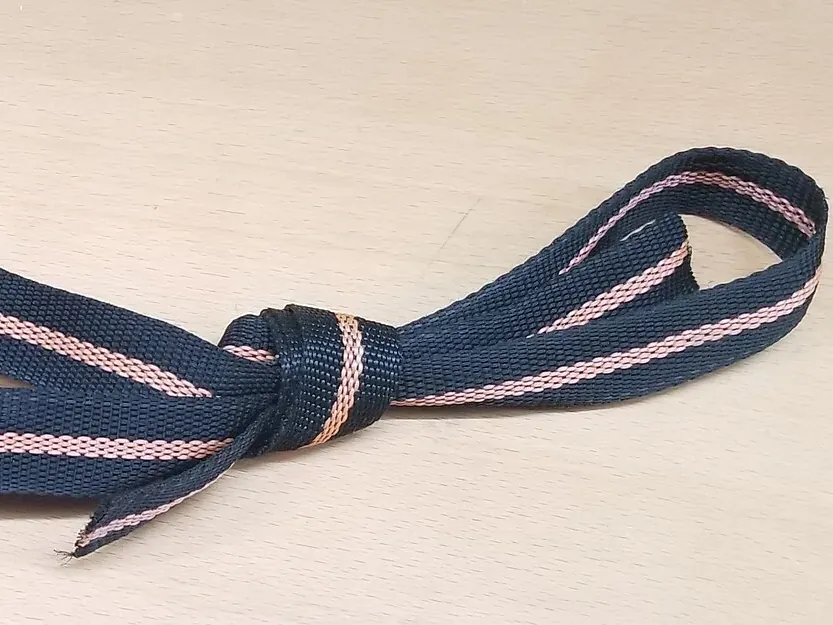
Frost knot

Joins the two ends of a piece of webbing into a small fixed loop; it is mostly used as the clip-in point at the top of a webbing aider (étrier), and it can also join two pieces of webbing.

Easy No ABoK number Climbing

Life safety: This knot is used in climbing, rescue or tree work. This app does not replace hands-on training; for life-safety work, practise under an instructor.

The animation and practice area for this knot are not ready yet. Available now: Overhand knot, Figure-eight knot, Double overhand knot, Stevedore knot, Ashley's stopper knot, Heaving line knot, Monkey's fist, Slip knot, Sheet bend, Double sheet bend, Carrick bend, Fisherman's knot, Double fisherman's knot, Water knot, Flemish bend (figure-eight bend), Offset overhand bend, Zeppelin bend, Hunter's bend, Butterfly bend, Blood knot (barrel knot), Albright special, Nail knot, Harness bend, Heaving line bend, Racking bend, Reever knot, Simple Simon over, Beer knot, Adjustable bend, Bowline, Double bowline, Water bowline, Bowline on a bight, Spanish bowline, Yosemite bowline, Cowboy bowline, Running bowline, Eskimo bowline, Figure-eight loop, Directional figure eight, Double figure-eight loop, Figure-of-nine loop, Alpine butterfly loop, Overhand loop, Angler's loop (perfection loop), Dropper loop, Farmer's loop, Artillery loop (manharness knot), Fireman's chair knot, Honda knot, Zeppelin loop, Bimini twist, Clove hitch, Slipped clove hitch, Cow hitch (lark's head), Half hitch, Two half-hitches, Round turn and two half-hitches, Anchor bend (fisherman's bend), Timber hitch, Killick hitch, Rolling hitch, Magnus hitch, Taut-line hitch, Buntline hitch, Cleat hitch, Highwayman's hitch, Tumble hitch, Mooring hitch, Halter hitch, Pile hitch, Constrictor knot, Strangle knot, Trucker's hitch, Siberian hitch, Marlinespike hitch, Pipe hitch, Tensionless hitch, Munter hitch, Cat's paw, Ground-line hitch, Becket hitch, Halyard bend, Lobster buoy hitch, Barrel hitch, Bale sling hitch, Swing hitch, Prusik knot, Klemheist knot, Bachmann knot, Autoblock (French prusik), Blake's hitch, Distel hitch, Adjustable grip hitch, Reef knot (square knot), Granny knot, Thief knot, Miller's knot, Packer's knot, Boa knot, Transom knot, Sheepshank, Chain sinnet, Square lashing, Diagonal lashing, Shear lashing, Common whipping, Sailmaker's whipping, Improved clinch knot, Palomar knot, Uni knot, Trilene knot, Arbor knot, Turle knot, Turk's head knot, Carrick mat, Wall and crown knot, Matthew Walker knot, Diamond knot, Chinese button knot, Celtic button knot, Pan Chang knot, Good luck knot, True lover's knot, Friendship knot.

How to tie it

  1. Bring the two ends of the webbing side by side, with both tails pointing the same way.
  2. Fold one end back about 25–30 cm to make a bight, and lay the other end between the two legs of that bight.
  3. Hold the three overlapping layers together as if they were a single strap and form a loop with them.
  4. Pass the folded end of the bundle through that loop to tie an overhand knot.
  5. Leave the tip of the bight standing out of the far side of the knot as a small loop; this is the clip-in point for a carabiner.
  6. Cinch the knot very tight before loading it.

The method was checked against: ITS Tactical: Knot of the Week: How to Tie an Etrier and Create a Field Expedient Ladder, Climbing: Cheap aid — knotting your own aiders and daisy chains (Climbing Tech Tips; asıl adres aid-cheap-aiders-and-daisy-chains-2 artık 404, yazı bu sayfada).

Origin and story

Why it was needed
Tying a secure clip-in loop at the top when making a stepped aid-climbing ladder (étrier) from webbing.
When
Unknown; a post on the IGKT forum dates it to the 1960s, and no primary source was found.
Who devised it
Attributed to the American climber Tom Frost (IGKT forum); not confirmed in Frost's own writing.
Where the name comes from
The name recalls Tom Frost, to whom the knot is attributed.

Its story

The Frost knot is attributed to Tom Frost, the American climber remembered for first ascents of big walls in Yosemite, for his photographs and for making climbing equipment; a writer on the IGKT forum reports that Frost first worked it out during the 1960s so it could be used in étriers. Étrier is French for stirrup; it is the name of the stepped webbing ladder that climbers stand in during aid climbing. A tip article in Climbing magazine suggests that anyone making their own aiders from webbing, instead of buying expensive sewn ones, start with this knot: the small loop it leaves becomes the clip-in point, and the steps are made below it with overhand knots. ITS Tactical also presents the knot as the first step of the ladder and notes that it also serves to join two pieces of webbing.

Source: IGKT forumu: Knots tied in webbing (tests), Wikipedia: Tom Frost, ITS Tactical: Knot of the Week: How to Tie an Etrier and Create a Field Expedient Ladder, ITS Tactical: Knot of the Week HD: Tying a Frost Knot to Start an Etrier or Join Webbing, Climbing: Cheap aid — knotting your own aiders and daisy chains (Climbing Tech Tips; asıl adres aid-cheap-aiders-and-daisy-chains-2 artık 404, yazı bu sayfada).

No sourced Turkish name yet.

Where not to use it
On a webbing loop that will bear weight in climbing unless it has been cinched very tight and is watched for slippage during the first uses (Climbing; the ITS Tactical author prefers the tape knot, or water knot, for a fixed webbing loop when climbing), and in jobs where the knot must be easy to untie later.
Weakness
Once it has been loaded the webbing is hard to untie (ITS Tactical); when newly tied it can slip, so it must be cinched very tight before use and watched during the first uses (Climbing). This does not replace hands-on training.
Similar and alternative knots

Sources and verification

  • The card was written in our own words from Wikipedia and Wikidata data; the tying method has not yet been checked against two sources.