Loop · Slipped
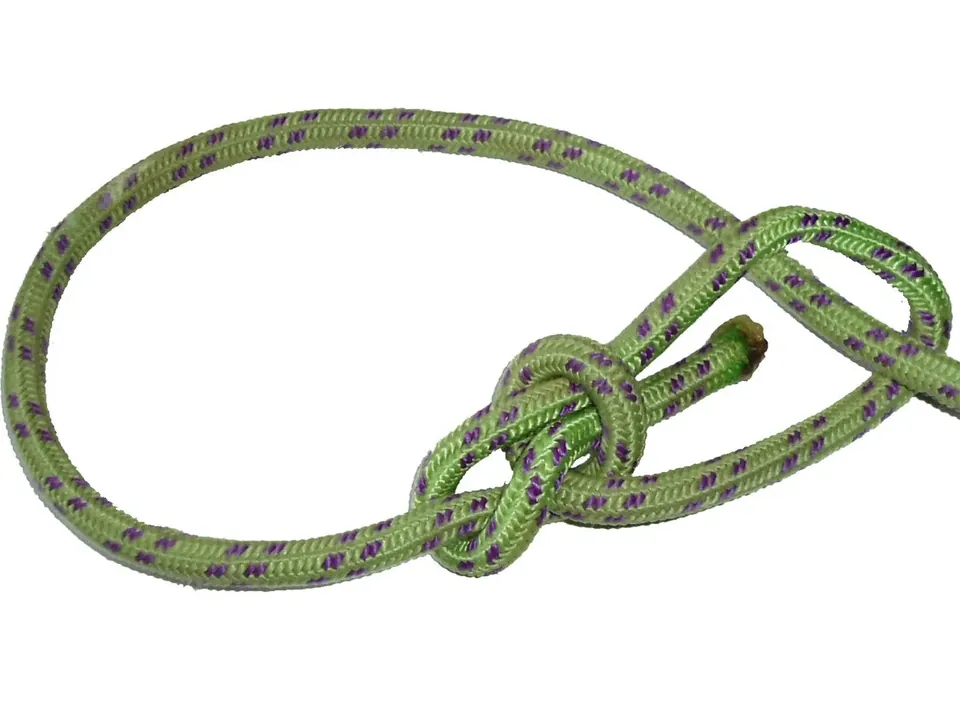
Running bowline
Turkish: Sugalı izbarço
Passes the standing part through the eye of a bowline to make a noose that tightens when pulled; for catching objects out of reach.
How to tie it
- Make a large loop with the working end: round to the right and back up beside the standing part.
- Make a small loop in the part of the big loop: take the end left, up and right, then down OVER its own part.
- Take the small eye around the main standing part: pass the end OVER it to the left, round, and back UNDER it.
- Pass the end through the small loop: in UNDER one side, out OVER the other.
- Take the end around BEHIND (under) the part of the big loop: the standing part of the small bowline.
- Bring the end back through the small loop: in OVER two parts, out UNDER the side of the loop.
- Tighten the small bowline; the big loop runs on the standing part.
The method was checked against: Animated Knots: Running Bowline, Wikipedia: Running bowline.
Turkish names, by who uses them
- Seafarers: Sugalı izbarço
- Scouts: Leş izbarço bağı
Main Turkish name from seafarers · MEB, KÜRE (Deniz Harp Okulu)
- Where not to use it
- On people or animals; it strangles.
- Weakness
- Loosens when unloaded.
Similar and alternative knots
Sources and verification
- Wikipedia: Running bowline
- Wikidata: Q1989722
- The tying steps were played in the rope engine to produce the checking signature; the comparison with two independent sources is in docs/pilot-baglar.md.